Top Homeopathic Remedies for Hay Fever
Streaming eyes. A nose that runs like a tap in one room and blocks solid in the next. Sneezing fits that arrive the moment the first tree pollen drifts into April air. Hay fever wears a different face on every patient who carries it, and homeopathic prescribing turns on that specificity. The quality of the discharge, the side first affected, the hour the sneezing peaks — these are what point to the remedy.
Why homeopathy for hay fever
The homeopathic approach treats seasonal allergic rhinitis as a self-expression of the organism under a particular strain. Pollen or dust is only the trigger; the response belongs to the person. Two patients sneezing in the same pollen count will show different pictures — one weeping from bland tears while the nose burns, another with inflamed cheeks and a nose running clear and painless. Matching the remedy to those specifics is the whole craft. The materia medica gives the discriminating signs; the prescriber reads the case.
Top remedies
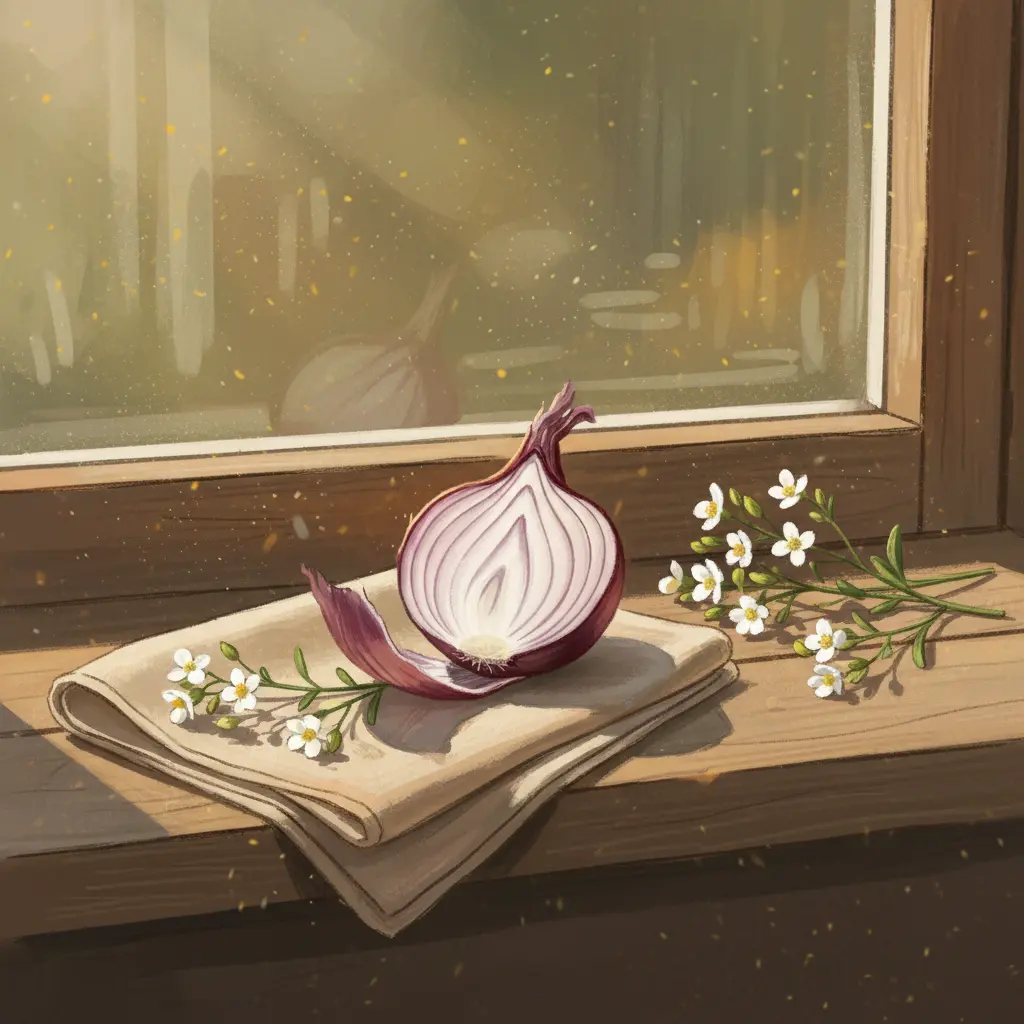
Allium Cepa
Acrid nasal discharge, bland tearing, better in open air. Allium Cepa is the red onion rendered into a dynamic preparation, and it carries the experience of chopping onions into its symptom picture exactly. The nasal discharge burns and excoriates the upper lip until it turns raw and red, while the tears from the eyes remain bland and painless. Violent sneezing on entering a warm room. The nose runs freely, usually from the left nostril first, and a hot lachrymation with photophobia often accompanies. Patients feel better in open air and distinctly worse sitting in a heated room.
Worse: warm rooms, evening, damp cold wind Better: open air, cool rooms, bathing
Euphrasia
The mirror image of Allium Cepa: acrid tears, bland nasal discharge. Euphrasia officinalis — eyebright — affects the eyes the way Allium affects the nose. Burning, biting tears run down the cheeks and redden them; the eyelids inflame and swell; the patient blinks constantly and waters profusely in bright light. The nasal discharge, by contrast, is fluent but bland. Conjunctival irritation dominates the case. When a hay fever patient arrives with eyes more miserable than the nose, and the cheeks show the excoriated track of the tears, Euphrasia is the first remedy to consider.
Worse: sunlight, wind, evening, indoors Better: darkness, open air, wiping the eyes
Sabadilla
Paroxysmal sneezing, itching at the roof of the mouth, worse from odor of flowers. The Sabadilla picture is dominated by the sneeze itself — long, violent, convulsive fits that leave the patient exhausted and clutching the head. A peculiar itching or tickling deep in the palate, which the patient tries to scratch with the tongue, is highly characteristic. Copious fluent coryza. Frontal headache. The mere scent of flowers, garlic, or fruit blossom can set the whole sequence running. Cold air makes the picture worse; warmth and warm food bring relief.
Worse: cold air, odor of flowers, full moon, periodic Better: warm food and drink, open air in warm weather, wrapping up
Arsenicum Album
Burning watery discharge, restless anxiety, worse after midnight. Arsenicum fits the hay fever case where the thin, watery discharge sets every surface it touches on fire — the nostrils redden, the upper lip excoriates, the eyes burn. The sneezing brings no relief. What distinguishes Arsenicum from Allium Cepa is the systemic picture: anxious restlessness, chilliness, a craving for small sips of warm water, and a marked aggravation between midnight and two in the morning. These patients pace. They want company. They dislike open air and feel better indoors, covered, near warmth.
Worse: after midnight, cold, open air, seashore Better: warm drinks, warm applications, indoors, company
Natrum Muriaticum
Egg-white discharge, morning sneezing spells, worse at the seashore. The Natrum Muriaticum hay fever patient describes nasal mucus that looks and feels like raw egg white — clear, ropy, profuse — and sneezes in long spells on waking. The nose alternates between flowing and obstructed. Loss of smell and taste during attacks. A fever blister may erupt on the lip or wing of the nose as the coryza develops. Repertories record the aggravation at the seashore: salt air intensifies the whole picture. Constitutionally, one often finds a history of reserved temperament and a grief the patient rarely speaks of — a mother who died, a marriage that ended quietly, a disappointment buried rather than mourned.
Worse: morning, sun, seashore, consolation, mental exertion Better: open air, cool bathing, sweating, skipping meals
When the case requires constitutional prescribing
An acute dose well-chosen will often settle a flare within hours — the sneezing eases, the discharge thins, the eyes stop streaming. For a first-season patient or a straightforward pollen exposure, that is usually enough. But when hay fever has returned every spring for a decade, when antihistamines have been layered year upon year, when the allergic tendency sits inside a broader picture of eczema or asthma or chronic sinusitis, the case asks for constitutional prescribing. That means a careful intake of the whole person — temperament, sleep, food cravings, old griefs, early illnesses — repertorized to the simillimum and given in a single higher potency with space for the organism to respond. A qualified homeopathic practitioner works this level of case. Repeated acute dosing without constitutional attention tends to plateau; the constitutional prescription can shift the underlying susceptibility over one or two seasons.
Related reading
- Hay fever condition hub — the full clinical guide with six top remedies and differentiation criteria
- Allergies — the broader allergic picture, including food and contact sensitivities
- Arsenicum Album — complete remedy profile
- Natrum Muriaticum — complete remedy profile
- Best Homeopathic Remedies for Respiratory Issues — cross-cutting listicle on nose, chest, and airway pictures
- Best Homeopathic Remedies for Immune Support — when allergic susceptibility recurs season after season
References
- Boericke, W. Pocket Manual of Homoeopathic Materia Medica. 9th ed. B. Jain Publishers, 2002. Allium Cepa, Euphrasia, Sabadilla.
- Kent, J.T. Lectures on Homoeopathic Materia Medica. B. Jain Publishers, 2006. Natrum Muriaticum, Arsenicum Album.
- Murphy, R. Nature's Materia Medica. 3rd ed. Lotus Health Institute, 2006. Nose and eye sections.
- Hering, C. The Guiding Symptoms of Our Materia Medica. B. Jain Publishers. Allium Cepa and Euphrasia differentiation.
